
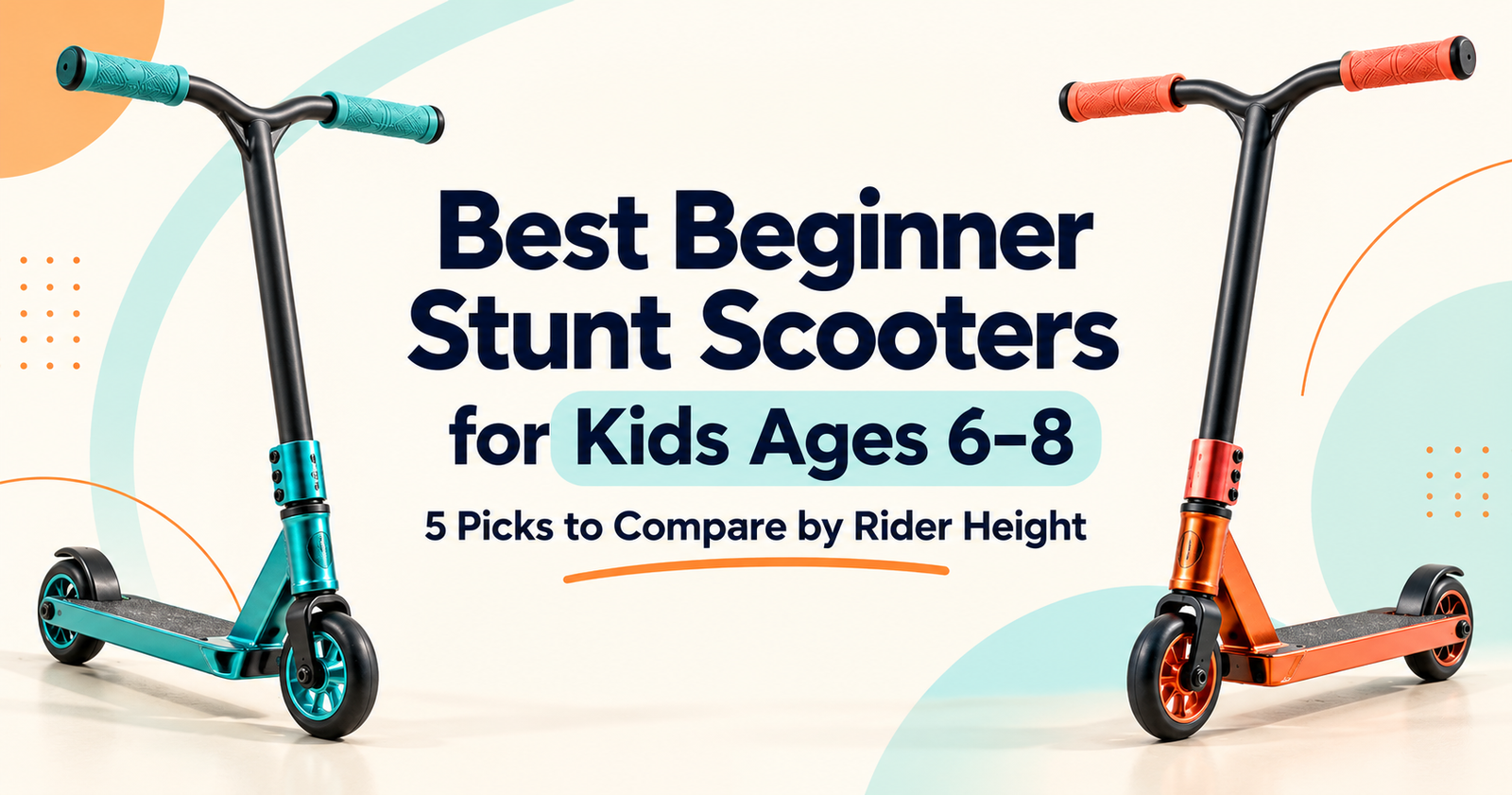
A first stunt scooter should help a child learn with a setup they can comfortably control. That starts with fit. Two children aged seven can need different scooters because their height, proportions, strength, and riding experience differ.
An age label can narrow your search, but it cannot tell you whether the handlebars will sit comfortably or whether the deck has enough standing space. For parents choosing a beginner stunt scooter for kids ages 6–8, measurements and a supervised fit check matter more than color, graphics, or the word “pro.”
This guide compares five complete scooters marketed for beginners or younger riders. Some are compact mini models; others belong on the shortlist only when a child needs a larger setup.
The recommendations are based on published specifications and intended use, rather than hands-on testing. Check the exact model’s instructions, minimum age, rider limits, and measurements before buying.
Amazon shopping note: The links below are Amazon searches, not confirmed in-stock listings. Check the size, generation, seller, and return terms before ordering.
Quick Comparison
| Scooter | Published height information | Scooter weight | Useful fit detail |
|---|---|---|---|
| Root Industries Type R Mini | 685 mm from ground | 3.3 kg | Compact model; 285 mm foot space |
| Lucky Recruit Mini — 2025 Motion | Assembled height not stated on cited page | About 3.0 kg | Mini deck; obtain assembled measurements |
| Envy ONE S3 | 785 mm total height | 3.6 kg | 340 mm foot space |
| Chilli Base S | 790 mm total height | 3.55 kg | 720 mm deck-to-T-bar measurement |
| Micro Ramp — global Black specification | 815 mm listed handlebar height | 3.7 kg | Larger option; confirm measurement reference |
These figures come from the manufacturers’ product pages.
Important: Ground-to-grip height, deck-to-grip height, and bare bar height describe different measurements. Compare like with like. Published dimensions are screening tools, not guarantees that a scooter fits a particular child.
1. Root Industries Type R Mini — Best Compact Starting Point
The Root Industries Type R Mini is worth checking first when a standard beginner complete looks too tall.
Root markets it for ages 4–8 and lists 685 mm total height from the ground, a 120 × 440 mm deck, and 285 mm of foot space. Specifications also include 3.3 kg weight, 110 mm wheels, IHC compression, and a 60 kg rider limit.
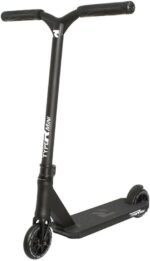 The compact dimensions make it a useful comparison point for a smaller rider. However, the child still needs to stand, steer, and use the brake comfortably.
Root’s separate size guide gives a different rounded height figure for the Mini. Confirm the delivered version’s measurements if your child is close to a fit boundary.
Advantages: Compact dimensions and published foot-space information.
Considerations: Confirm current sizing rather than relying only on the age label.
Best for: Smaller beginners whose measured fit calls for a mini complete.
Amazon.com: Mini Scooter Type R – Black Matte by Root Industries : Sports & Outdoors
2. Lucky Recruit Mini — Best Alternative Mini to Compare
The Lucky Recruit Mini is another compact option to investigate. This recommendation refers to the 2025 Motion configuration, rather than assuming every Recruit listing has identical bars.
Lucky markets the model for younger riders aged 4–8. Its page lists a 17 × 4.5-inch deck, 110 × 24 mm wheels, IHC compression, and approximately 3.0 kg weight.
 The published aluminum bar dimensions are 17 × 16 inches, but the page does not provide assembled ground-to-grip height. Ask the seller for that figure and the deck-to-grip measurement before comparing it with another mini.
Earlier Recruit listings show different bar dimensions, making the exact generation important.
Advantages: Compact deck and relatively low published weight.
Considerations: Assembled height needs confirmation; verify the generation.
Best for: Parents comparing mini options who can obtain clear measurements.
3. Envy ONE S3 — Best for More Published Standing Space
The Envy ONE S3 offers a useful next comparison when a mini deck feels cramped.
Envy positions it as an entry-level complete for ages 5–9. Its specification table lists 785 mm total height, a 120 × 480 mm deck, 340 mm foot space, 3.6 kg weight, and IHC compression.
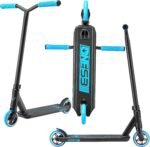 There is a specification inconsistency to resolve: the description states 580 mm bar height, while the table states 550 mm. Confirm the actual configuration before ordering, especially if handlebar height is the deciding factor.
The foot-space measurement is helpful because overall deck length includes areas that may not be available for standing.
Advantages: Published usable foot space and an entry-level focus.
Considerations: Larger than the compact mini options; bar-height information conflicts.
Best for: Beginners who need more standing space and can confirm suitable assembled fit.
Amazon.com: Envy Scooters One S3 Complete Scooter – Blue : Sports & Outdoors
4. Chilli Base S — Best for a Published Deck-to-Bar Measurement
The Chilli Base S stands out because Chilli publishes a measurement directly relevant to the rider’s standing position.
For the cited Green configuration, Chilli lists 790 mm total height and 720 mm from deck to T-bar. It also specifies a 115 × 470 mm deck, 550 mm bar width, 110 mm wheels, HIC compression, and 3.55 kg weight.
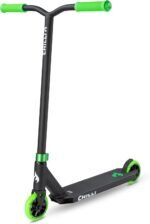 Chilli identifies the Base S as a beginner model; its official regional range page describes it for children aged six and over.
The deck-to-bar figure helps you compare the setup with a scooter your child has tried. Width deserves attention too: a child should not need an uncomfortable reach simply because the height looks suitable.
Advantages: Both overall and deck-to-bar measurements are published.
Considerations: Confirm Base S rather than the larger Base; assess hand spacing.
Best for: Parents who want clearer standing-position measurements.
5. Micro Ramp — Best Larger Option to Check in Person
The Micro Ramp is a conditional choice for children who need a larger setup, rather than a default recommendation for every six-year-old.
Micro’s global Black product page lists 81.5 cm handlebar height, 3.7 kg weight, 100 mm wheels, a 10.5 cm deck width, and a fixed, non-folding design.
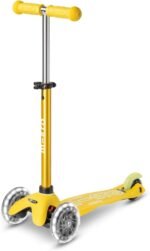 The UK distributor separately describes 74 cm from footplate to handlebar and suggests a 140–160 cm rider-height range. These measurements use different references; the listings also differ on deck length.
Inspect the exact version or obtain its assembled measurements. Many children aged 6–8 will need a smaller model.
Advantages: Beginner freestyle positioning and fixed construction.
Considerations: Larger fit; reconcile listing measurements and instructions.
Best for: Taller children whose measurements support this size.
How to Choose by Rider Height
 Measure the Child Before Browsing
Record the child’s height and have them wear their usual riding shoes for a fit trial. If they already use a scooter comfortably, record its deck-to-grip height and bar width.
Write down what feels wrong with the current setup: bars too high, cramped feet, awkward hand spacing, or difficulty managing the scooter. This gives you a practical buying target.
Compare the Correct Height Measurement
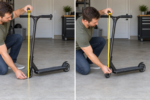 An assembled scooter’s ground-to-grip height includes the height of the deck above the ground. A bare bar measurement does not represent the child’s full standing relationship to the grips.
Ask sellers to identify the starting and finishing points of their measurements. A tape-measure photograph can be more useful than an unexplained number.
Do not estimate a complete scooter’s height by simply adding a bar dimension to a wheel size.
Use Sizing Guides as a Starting Point
 Root recommends a general handlebar position around the waist-to-belly-button area and acknowledges that personal preference matters. Treat that as an initial guide, then assess the child standing on the actual deck.
Have an adult stabilize the scooter during the trial. Check whether the child can hold both grips comfortably, turn the bars, and maintain a natural stance.
Avoid buying an oversized scooter solely to obtain extra years of use.
Check Foot Space and Brake Reach
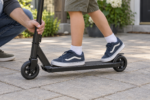 A long-looking deck may contain less usable space than expected. The front assembly and rear brake occupy part of the platform.
Check the child’s preferred stance with both riding shoes. They should also understand how the stopping mechanism works and be able to reach it without losing control.
Do not assume that a rear fender is an operational brake.
Consider Manageability, Not Just Weight
Published weight helps narrow the comparison, but it does not describe how the whole scooter will feel to your child.
During a supervised trial, let them push slowly, turn, stop, and reposition the scooter. There is no need to test jumps to decide whether the basic setup is manageable.
If the child struggles with ordinary control, reassess the fit before discussing tricks.
Stunt Scooter or Everyday Kick Scooter?
 Buy for the intended activity. A scooter marketed for commuting or casual cruising is not automatically approved for jumps just because it has two wheels.
Conversely, a fixed stunt complete may be less convenient to transport than a folding scooter. Confirm the intended use in the manufacturer’s instructions rather than judging suitability by appearance.
If your child is still learning balance, steering, and stopping, focus on those skills before ramp riding.
Safe First Sessions
The U.S. Consumer Product Safety Commission recommends a helmet and knee and elbow pads for scooter riders. Johns Hopkins also advises smooth, paved surfaces away from traffic and close supervision for young children. d to the activity and fitted correctly. Begin in a dry, clear area where the child can practice pushing, turning, and stopping at low speed.
Before riding, an adult should complete assembly and inspect fasteners according to the manual. Check the clamp, wheels, grips, bar ends, and brake.
At a skatepark, help your child understand the layout and other riders’ lines before entering a busy section. A beginner scooter does not make an unfamiliar trick appropriate for a beginner rider.
What to Check Before Ordering on Amazon
Match the listing to the specific size and generation in your shortlist. “Mini,” “S,” and a familiar model name do not eliminate version differences.
Confirm the included components, intended use, rider limits, seller, and assembly instructions. Ask for missing dimensions before ordering.
Also check return shipping, restocking charges, and whether assembly or outdoor use affects return eligibility. Keep packaging until you have completed the permitted fit check.
Frequently Asked Questions
What is the best stunt scooter for a six-year-old?
Begin with measurements. Compact models such as the Type R Mini and Recruit Mini are useful starting points, but neither is an automatic fit.
Should I buy a bigger scooter so my child can grow into it?
Avoid sacrificing present control for future growth. Choose a setup your child can manage now, then reassess as they grow.
Can siblings share a stunt scooter?
Only if it fits both children and each meets the manufacturer’s requirements. Different heights can make one shared setup impractical.
Does “pro scooter” mean it is only for advanced riders?
No. Some brands use “pro” for their freestyle product category and also sell beginner models. Check intended use and skill level separately.
Should I cut the bars if they are too tall?
Ask the manufacturer or a qualified scooter shop first. Cutting is irreversible and can affect compatibility and returns. A correctly sized complete is a simpler starting point.
Choosing Your Child’s First Stunt Scooter
Compare the two mini options first for a smaller rider, then consider the ONE S3 or Base S if more space or height is needed. Keep the Micro Ramp on the list only when its verified dimensions suit the child.
The best first stunt scooter fits the rider, meets the intended-use requirements, and supports confident basic control.
You May Also Like
Best Pro Scooters for Tall R ...
October 5, 2026
Best Pro Scooters For Teen
March 10, 2021
Leave a Comment